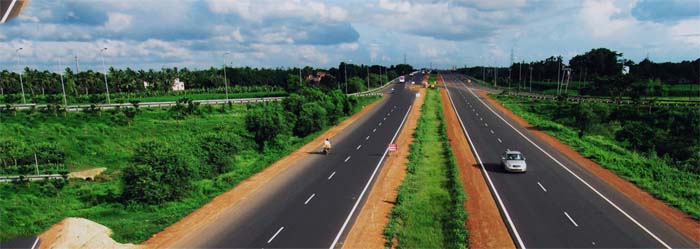
- Godhra–Vadodara stretch opens on trial, marking a leap in Gujarat’s high-speed connectivity
- Part of Bharatmala Pariyojana, 8-lane corridor promises faster, smoother intercity travel
- Boost to trade, logistics, and regional growth as congestion eases on existing routes
- MoRTH notifies new rules to curb overloading and protect highway infrastructure
- Revised penalty structure, FASTag mandate and digital tracking to ensure compliance
- Twin push signals India’s shift towards safer, smarter, and world-class road networks
NE INFRASTRUCTURE BUREAU
AHMEDABAD, NEW DELHI, APR 14
In a major boost to India’s highway infrastructure, the Godhra–Vadodara stretch of the Delhi–Vadodara Expressway has been opened for traffic on a trial basis from April 13, 2026, even as the Ministry of Road Transport and Highways (MoRTH) unveiled new rules to regulate overloaded vehicles on National Highways.
Developed under the ambitious Bharatmala Pariyojana, the newly operational expressway section runs from Bhamaiya village near Godhra in Panchmahal district to Dodka village near Vadodara. Built as an eight-lane, access-controlled corridor, it is designed for high-speed, seamless travel.
The expressway is expected to significantly improve connectivity between Godhra, Kalol, and Vadodara, offering a faster and more efficient route for commuters and transporters. By easing congestion on existing highways and reducing travel time, the corridor is set to enhance the movement of goods and passengers.
Officials noted that the improved connectivity will also spur regional economic growth by facilitating better access to key urban and industrial hubs across Gujarat. However, to maintain safety and speed standards, slow-moving vehicles will not be permitted on the expressway. The stretch will be formally inaugurated after the successful completion of the trial phase.
New Rules to Check Overloading
In a parallel move to strengthen highway safety and infrastructure longevity, MoRTH has notified the National Highways Fee (Determination of Rates and Collection) Fourth Amendment Rules, 2026, which will come into force from April 15.
The revised framework introduces stricter and more transparent provisions for levying fees on overloaded vehicles based on the extent of excess load:
- Up to 10% excess load: No overload fee
- Over 10% and up to 40%: Fee charged at 2 times the base rate
- Above 40%: Fee charged at 4 times the base rate
The amendment mandates the use of certified weighment devices at fee plazas to determine overloading, ensuring scientific and accurate measurement. Importantly, no overload fee will be levied at plazas lacking such facilities.
To enhance transparency and compliance, all overload fees must be paid digitally through FASTag, while details of violators will be recorded in the VAHAN database.
Vehicles entering National Highways without a valid FASTag will continue to attract penalties under existing provisions. However, the new rules will not apply to certain pre-existing private concession projects unless operators voluntarily adopt them.
The notification also includes detailed illustrations to clarify fee calculations, aiming to eliminate ambiguity in implementation.
Infrastructure Push Gains Momentum
Together, the opening of the expressway stretch and the tightening of overloading norms reflect a dual strategy—expanding capacity while safeguarding infrastructure. Experts say this integrated approach will not only improve road safety but also ensure durability and efficiency across India’s rapidly growing highway network.