R ARIVANANTHAM
CHENNAI, MAR 24
In a stark warning that cuts to the core of India’s manufacturing ambitions, the All India uPVC Profile Manufacturers Association (AIUPMA) has urged the government to step in immediately, cautioning that unchecked Chinese imports are pushing domestic uPVC manufacturers to the brink.
- Industry hits tipping point as Chinese imports capture 51% market share
- 57% idle capacity signals deep distress across India’s uPVC manufacturing ecosystem
- AIUPMA seeks urgent policy shield—BIS norms, MIP and duty overhaul
- Alleged predatory pricing undercuts even raw material costs of local players
- Livelihoods across MSMEs, fabrication and supply chains hang in balance
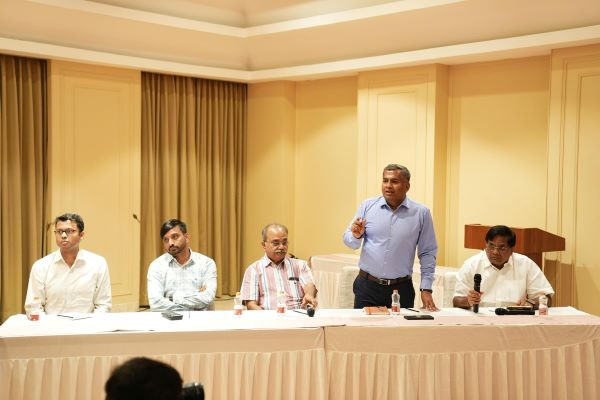
At a high-decibel national media conference in Chennai, industry leaders revealed that imports have surged to 1.6 lakh metric tonnes in 2025, with a staggering 99% sourced from China, rapidly eroding the competitiveness of Indian producers.
Eniyan Shivam, President, AIUPMA said: “If this situation persists, manufacturing in India may become unviable. The vision of ‘Make in India’ risks turning into merely ‘Sell in India’.”
A Market Tilted Against Domestic Industry
The association flagged a dramatic shift in market dynamics—Chinese imports now command 51% share, overtaking Indian manufacturers, who have slipped to 49%.
What has alarmed the industry further is the pricing pattern.
AIUPMA Leadership: “Imported profiles are being sold at prices lower than even the raw material cost required for domestic production, creating a completely uneven playing field.”
Over the past three years, imports have steadily climbed, tightening the squeeze on local manufacturers.
Policy Paradox Hurting Indian Players
A key structural concern, the association noted, lies in India’s duty framework. While raw materials attract higher anti-dumping duties when imported directly, finished products manufactured abroad—particularly in China—enter India at significantly lower duties.
AIUPMA Office Bearers: “This inverted duty structure gives foreign manufacturers a massive pricing advantage, undermining domestic value addition.”
Quality Concerns and Consumer Fallout
Beyond pricing, the association raised red flags over product quality, alleging that many imported profiles deteriorate within two to three years, impacting consumer trust and the overall reputation of the segment.
AIUPMA Representatives: “Inferior imports not only hurt manufacturers but also erode customer confidence in the entire category.”
Industry in Distress Mode
The consequences are already visible. Domestic units are operating at nearly 57% idle capacity, leading to underutilised plants, financial stress and uncertainty across the value chain.
The ripple effect extends far beyond manufacturers—to MSMEs, fabricators, installers, logistics providers and thousands of workers dependent on the ecosystem.
Arokiaswamy, Founder President, AIUPMA said: “This is not just about industry margins—it is about protecting livelihoods and sustaining a critical manufacturing ecosystem.”
Urgent Policy Prescription
AIUPMA has called for immediate, decisive intervention from the government, outlining key measures:
- Mandatory BIS certification for all uPVC profile imports
- Introduction of a Minimum Import Price (MIP) to curb underpriced inflows
- Comprehensive review of the anti-dumping duty (ADD) structure
- Stronger quality checks at ports and safeguard duties on finished imports
AIUPMA Leadership commented: “Timely policy action is essential to restore fair competition and prevent irreversible damage to domestic manufacturing.”
The issue has also reached Parliament, with concerns raised by Erode MP K. E. Prakash, amplifying the urgency at the national level.
The Bigger Warning
For AIUPMA, the message is clear: without swift intervention, India risks losing not just market share—but manufacturing sovereignty in yet another sector.