- Ahmedabad Literary Society Founder-President says literature must heal fractured hearts, provoke thought and preserve humanity in the age of artificial intelligence
- Acclaimed author reflects on her evocative Hindi poetry collection ‘मैं इश्क़ नहीं लिख सकती अब’, women empowerment, multilingual writing and the future of meaningful publishing
- Believes books remain society’s quietest yet most transformative force, capable of nurturing empathy, resilience and authentic living
- Calls for literature to become a living conversation by connecting readers, writers, educators and communities across generations
- In an exclusive conversation with Navjeevan Express, she speaks candidly on love, loss, creativity, entrepreneurship and why purpose must always triumph over profit
R MANICKAVASAGAM
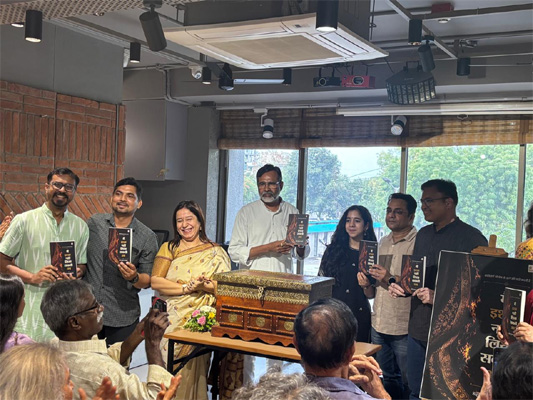
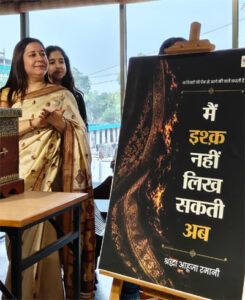
At a time when artificial intelligence is reshaping creativity, digital distractions are shrinking reading habits and instant gratification dominates public discourse, acclaimed author, educator and Ahmedabad Literary Society (ALS) Founder-President Shraddha Ahuja Ramani believes literature has never been more relevant. Speaking on the sidelines of the launch of her latest Hindi poetry collection, “मैं इश्क़ नहीं लिख सकती अब”, in Ahmedabad on Sunday, Ramani reflects on the evolution of love, the healing power of poetry, the responsibilities of writers in contemporary society and her lifelong mission to democratise literature.
In this exclusive interview with R. Manickavasagam, Editorial Advisor, Navjeevan Express, she shares deeply personal insights into her literary journey, the philosophy behind her writing, the role of women in leadership, the future of publishing and why empathy, conscience and lived experience will always remain beyond the reach of algorithms.
Excerpts:
The title ‘मैं इश्क़ नहीं लिख सकती अब’ (Main Ishq Nahi Likh Sakti Ab) is both intriguing and emotionally unsettling. Has love changed, or has the world changed so profoundly that poetry itself is compelled to find a new voice? What deeply personal experience inspired this collection?
The title is not a rejection of love. It is an acknowledgment that love, in its purest sense, has evolved into something much deeper than romance. Today, the world is witnessing loneliness despite constant connectivity, relationships that are often transactional, and emotions hidden behind carefully curated lives. As a writer, I could no longer write about love in the conventional sense because my heart was compelled to write about loss, resilience, silence, self-respect, healing, and the courage to begin again.
Every poem in this collection carries fragments of lived experiences, observations, conversations, and emotions that many of us experience but seldom articulate. This book is not about one incident or one person. It is about the journey from illusion to understanding. Sometimes the most powerful expression of love is learning when to let go, when to heal, and when to love oneself. That realization became the soul of this collection.
You effortlessly wear many hats—teacher, mother, wife, entrepreneur, mentor, author and lifelong learner. What is the secret behind balancing these demanding roles while continuing to inspire Gen-Next, particularly young women aspiring to excel in multiple spheres?
I have never believed in the idea of perfect balance. Instead, I believe in living with purpose. Every role enriches the other. My students inspire my writing, motherhood teaches me patience, literature deepens my understanding as an educator, and every challenge becomes material for growth.
The real secret is discipline, prioritisation, and the willingness to keep learning. I also believe women should never feel guilty for dreaming beyond traditional expectations. One does not have to choose between family and ambition. With support, determination, and careful planning, both can coexist beautifully.
To young women, I would simply say: never underestimate the power of consistent effort. Success is rarely built on extraordinary talent alone. It is built on ordinary discipline practised every single day.
At a time when digital distractions are shrinking reading habits and AI is redefining content creation, what keeps your faith alive in the enduring power of books, poetry and literature? Can literature still shape society as it once did?
Technology changes the way we consume information, but it cannot replace the human need for meaning. Artificial intelligence can generate words, but it cannot experience grief, compassion, sacrifice, or hope. Literature emerges from lived experience, and that is its greatest strength.
Books slow us down. They encourage reflection instead of reaction. Poetry allows readers to confront emotions they often struggle to express themselves. I believe literature still shapes society, perhaps not through dramatic revolutions, but through quiet transformations in individual hearts and minds. Every compassionate citizen was once influenced by an idea, a teacher, or a book.
You write in English, Hindi and regional languages. Is language merely a medium for you, or does each language unlock a different emotional landscape and connect you with a distinct readership?
Language is much more than a medium. It carries memories, culture, rhythm, and emotion.
Hindi allows me to express intimacy, vulnerability, and poetic depth. English enables me to engage with analytical ideas and reach a wider global audience. Every language has its own heartbeat, and as a writer, I enjoy listening to each one.
Ultimately, emotions remain universal. Language simply offers different colours with which to paint the same human experience.
Your literary canvas stretches from schoolchildren to intellectuals and corporate leaders, covering themes ranging from relationships and spirituality to social issues and self-discovery. Is this diversity a conscious mission to democratise literature and make it accessible to every generation?
Absolutely.
I have always believed literature should never become exclusive. Stories and poems belong to everyone, irrespective of age, profession, or educational background. Whether I write for a child discovering books for the first time or for an academic audience, my objective remains the same: to encourage reflection and empathy.
If literature speaks only to a select few, it loses much of its transformative potential. My writing attempts to build bridges between generations, experiences, and perspectives.
Many aspiring writers believe passion alone is insufficient to sustain a literary career. From your own journey, is being a full-time author economically viable in India today? What practical advice would you offer emerging writers navigating publishing, royalties and digital platforms?
Writing is both an art and a profession. Passion is essential, but professionalism is equally important.
It is possible to build a meaningful literary career in India, but very few writers depend solely on book royalties. Today’s authors must diversify by conducting workshops, speaking at literary festivals, engaging with readers, collaborating with educational institutions, and building a credible digital presence.
My advice is simple: write consistently, read extensively, understand publishing contracts, protect your intellectual property, and never compromise quality for quick visibility. Build readers before chasing sales. Trust grows slowly, but it lasts much longer than trends.
Through the Ahmedabad Literary Society, you’ve built a vibrant platform that celebrates literature beyond conventional book launches. What larger cultural movement are you trying to create, and how important is community-building in nurturing India’s next generation of readers and writers?
The Ahmedabad Literary Society was created with the belief that literature should be experienced as a living conversation rather than an isolated activity.
Our aim is to create spaces where established authors, emerging writers, students, educators, and readers interact freely. Literature flourishes when communities support one another through dialogue, mentorship, and shared experiences.
If we wish to nurture future writers, we must first nurture curious readers. Communities create confidence, and confidence creates creativity.
Savitri Publications has consistently championed meaningful, socially conscious literature instead of chasing commercial bestsellers. In an increasingly market-driven publishing ecosystem, why have you chosen purpose over profit, and has that philosophy strengthened or challenged your journey?
Publishing, for me, has always been an extension of social responsibility.
Commercial success is important because it sustains an organisation, but purpose gives it identity. At Savitri Publications, we consciously encourage voices that contribute positively to society, preserve meaningful narratives, and encourage thoughtful dialogue.
This approach certainly presents challenges because socially relevant books may not always become instant bestsellers. However, the trust we have earned from authors and readers has been far more valuable than short-term commercial gains. I believe meaningful literature eventually finds its readers.
You have often said that literature should heal, provoke thought and preserve humanity. In an era increasingly dominated by algorithms, artificial intelligence and instant content, what qualities do you believe only human creativity and poetry can offer?
Human creativity carries imperfections, contradictions, memories, and lived emotions. These cannot be replicated through calculation alone.
Poetry does not merely communicate ideas. It creates silence where reflection begins. It asks questions without insisting on answers. It comforts without pretending that pain does not exist.
Artificial intelligence may become an extraordinary tool for creators, but empathy, conscience, moral imagination, and genuine emotional vulnerability will always remain uniquely human. These are the qualities that keep literature alive.
If a young reader or aspiring poet picks up ‘मैं इश्क़ नहीं लिख सकती अब’ and closes its final page, what is the one emotion, question or life lesson you hope will stay with them forever?
I hope they leave the book feeling understood.
If even one reader realises that vulnerability is not weakness, that healing is possible, and that self-worth should never be sacrificed in the name of love, the purpose of this collection will be fulfilled.
More than anything, I hope the book inspires readers to ask themselves one honest question: “Am I living authentically, or merely fulfilling expectations?”
The courage to answer that question can transform an entire life.
Book Information:
“मैं इश्क़ नहीं लिख सकती अब” is a 192-page Hindi poetry collection recommended for readers aged 13 years (teenagers) and above. Published at a price of ₹400, the book is available for purchase on Amazon.